A gratitude list can feel almost insulting after a bad day. You’re worried about money, angry about how someone treated you, or exhausted from caring for a family member—and a prompt asks for three things you’re thankful for. If the exercise seems to require you to stop feeling what you feel, it’s not much help.
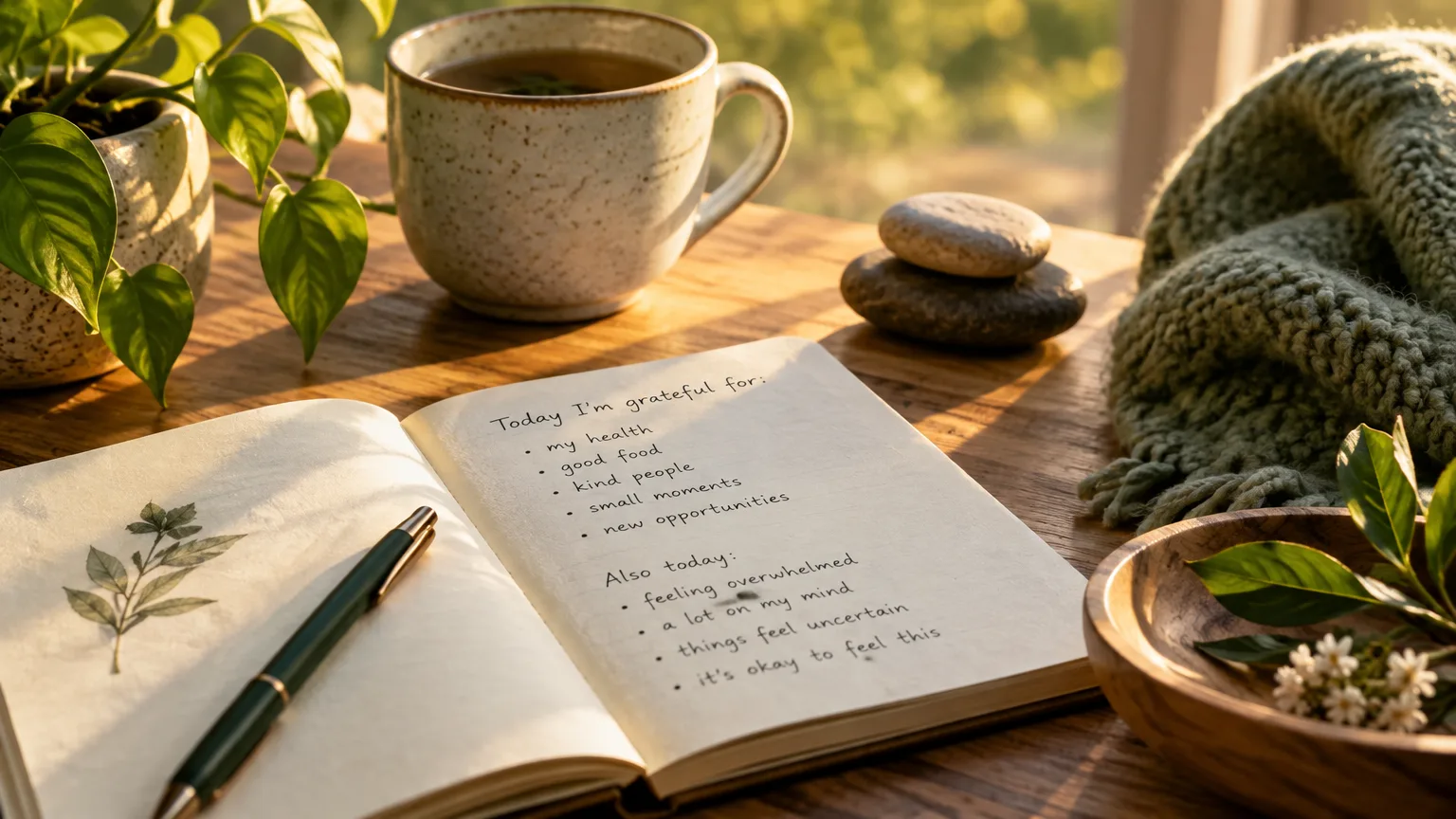
Gratitude works better when it makes room for the whole day. You can appreciate the friend who checked in and still be upset about the problem you told them about. You can enjoy a quiet meal without calling a difficult week “a blessing.” The point isn’t to turn pain into a lesson. It’s to notice something worth appreciating without asking it to cancel anything else.
Appreciation is not a verdict on your life
Forced positivity treats an unpleasant feeling as a mistake to correct. Realistic gratitude asks a narrower question: Was there anything that helped, mattered, or felt good, even briefly? Some days the answer is a person you love. Other days it’s a working heater or ten minutes without an interruption.
That distinction matters because hard feelings carry information. Anger may tell you a boundary was crossed. Anxiety may point to a problem that needs a plan. Sadness may be a response to a real loss. The CDC recommends identifying and addressing difficult emotions, not simply trying to replace them with pleasant ones.
A useful sentence has two parts: “I’m disappointed that I didn’t get the job, and I’m grateful my friend made time to listen.” Both parts remain true. You don’t owe the disappointment a cheerful ending, and the conversation with your friend doesn’t become less valuable because you’re still disappointed.
This also means you don’t have to be grateful for hardship. Appreciating someone’s help during an illness is different from appreciating the illness. If a gratitude prompt asks you to find the “gift” in something that harmed you, you can decline it.
Keep expectations modest
Gratitude practices have evidence behind them, but they aren’t a cure or a reliable way to change your mood on command. A 2025 analysis of 145 studies found small average gains in well-being, with results varying across countries and types of practice. An average benefit doesn’t mean every person will feel better after every exercise.
The feelings that come up can be mixed, too. In three studies of gratitude exercises, participants reported pleasant feelings alongside feelings such as indebtedness; one comparison also found more guilt. Thinking about a parent who helped you, for example, might bring warmth and a sense that you haven’t called enough. You haven’t “failed” at gratitude if appreciation arrives with another emotion.
Even the exercise itself won’t suit everyone. The National Institutes of Health notes that gratitude practice helps some people but not others. That’s a reason to experiment gently, not to push harder when a practice leaves you feeling worse.
Start with the feeling, then look for what helped
Before reachinging for a list, pause long enough to name what’s happening: “I’m tense about tomorrow’s meeting,” or “I miss her.” You don’t need to analyze the feeling or fix it. Giving it an honest place in the sentence helps keep gratitude from becoming a way to talk over yourself.
Then, if you want to, ask one small question: “What supported me today?” Maybe a coworker covered a task. Maybe you took a break before answering a message. Maybe nothing comes to mind. You’re allowed to stop there.
Try keeping the two observations side by side rather than joining them with “but.” “I’m overwhelmed, but at least I have a job” can sound like an argument against being overwhelmed. “I’m overwhelmed, and my coworker helped me finish the shift” gives each fact its own space. The wording is simple; its value is that it doesn’t require you to feel better before you can tell the truth.
Five ways to practice without forcing it
You don’t need a special journal, a daily streak, or three impressive answers. Pick a format that fits the energy you have.
1. Write one honest line
Use a note on your phone or the back of an envelope. Start with “Today was hard because…” and follow it with “One thing I appreciated was…” You might write: “I’m worn out from making calls about the bill. I appreciated that my sister stayed on the phone with me afterward.”
If writing about the hard part feels like too much, skip it. If you need to write only about the hard part, do that. The page is there to help you notice your experience, not produce a balanced report.
2. Notice help while it’s happening
When someone holds a door while your hands are full or a friend sends a message at a good moment, pause for a few seconds. Notice what they did and what difference it made. Appreciation can be quiet; you don’t have to turn it into a big emotion.
You can also thank someone specifically: “Thanks for taking that call. I felt less alone.” Send the message if it feels right. If the relationship is complicated or contacting the person would be unwise, you can leave the thought unsent.
3. Name a small comfort, not a silver lining
A comfortable chair, a familiar song, or the first cool minute after you get home may be easier to notice than a life lesson. Try “I liked that cup of tea” rather than “Everything happens for a reason.”
This works especially well on days when you have little control over the larger problem. The comfort doesn’t solve it. It was still a comfort.
4. Appreciate your own effort
Gratitude doesn’t have to point outward. You might acknowledge that you asked a difficult question, rested when you needed to, or made dinner despite feeling drained. This isn’t a demand to celebrate productivity. Sometimes the effort worth noticing is choosing not to take on one more task.
That can matter during a long job search, when each application starts to feel like a verdict on your worth. If that’s familiar, there are more ways to stay motivated while job searching without pretending rejection doesn’t hurt.
5. Make the practice occasional
If a nightly list starts to feel like homework, try once a week. Think back over the week and choose one moment you’d like to remember. You can speak it aloud, write a sentence, or tell someone who was there.
Frequency is not a test of character. A short practice you can approach freely is more useful than a streak that makes you resentful. And if the question “What am I grateful for?” feels too loaded, ask “What made today a little easier?” instead.
Don’t use gratitude to talk yourself out of action
Appreciation can sit beside a decision to change something. You can value a colleague’s kindness and still recognize that the workload is unsustainable. You can be thankful for a partner’s help one day and still address a pattern of disrespect. One good thing does not settle every other question.
After you notice what you appreciate, ask whether the difficult feeling needs a response. Do you need to rest, set a boundary, get information, ask for help, or make a plan? If work stress keeps piling up, recognizing signs of burnout may be more useful than adding another self-care task to your evening.
There are times when a gratitude exercise is the wrong tool altogether. During acute grief, you may want company, quiet, or room to remember the person you lost—not a prompt to identify something positive. Grief can include many feelings, and you don’t need to follow a prescribed emotional schedule. Nor should gratitude be used to make an unsafe situation seem acceptable.
Know when to put the exercise aside
Pay attention to how a practice affects you over time. If it helps you notice support while staying honest about your needs, keep it. If it repeatedly brings up guilt, pressure, or a feeling that you’re minimizing what happened, change the prompt or stop. You can support your well-being in other ways, including talking with someone you trust, getting rest, or seeking professional help.
Gratitude is a small practice, not a substitute for care. The National Institute of Mental Health advises seeking professional help for severe or distressing symptoms that last two weeks or more, such as trouble functioning, major sleep changes, or loss of interest in things you usually enjoy. You can also reach out sooner if you’re concerned. If you’re in crisis or having thoughts of suicide in the United States, call or text 988 for support.
On a hard day, a workable gratitude practice may be as brief as this: “That hurt. Someone helped.” You can take the help seriously without asking it to erase the hurt.
Disclaimer
This article provides general well-being information and is not a substitute for individualized mental health care.